Astronomy & science · first seen 26 Aug, updated 26 Aug
NASA’s James Webb Space Telescope detected water molecules and freshly produced silicate dust around a dying star seen just 0.55 light-years in projection from the Milky Way’s central black hole—showing that surprisingly fragile material can form and survive within the Galaxy’s radiation-drenched central environment.
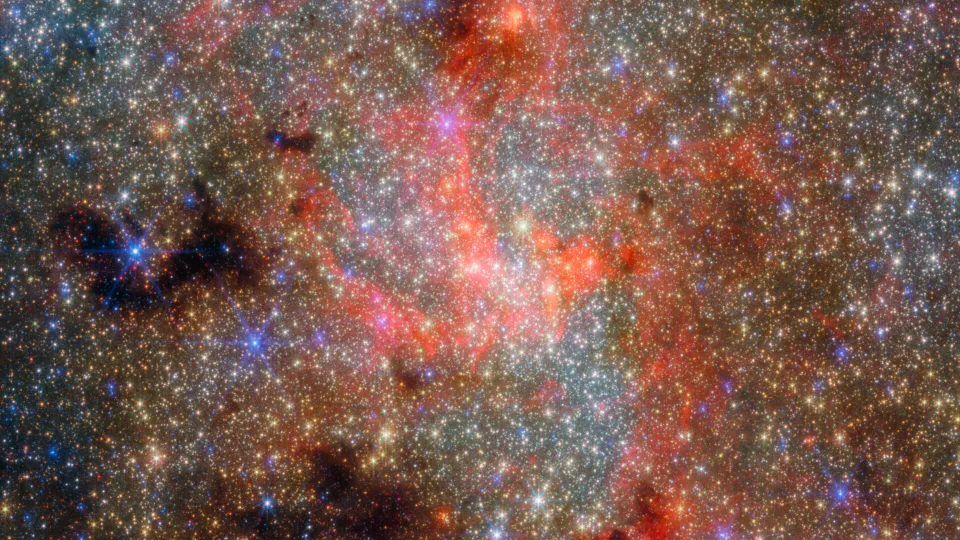
Webb's MIRI spectrum identifies molecular water and oxygen-rich silicates around IRS 3, while projected geometry and the dust-production inference require careful separation. The post NASA’s James Webb Space Telescope detected water molecul…
Summary from SpaceDaily.