Astronomy & science · first seen 17 Aug, updated 17 Aug
James Webb spotted a bizarre object just 660 million years after the Big Bang that looks like an enormous star but shines with roughly 100 billion Suns’ worth of energy — because hidden inside its star-like cocoon is an accreting black hole, rather than a core powered by nuclear fusion.
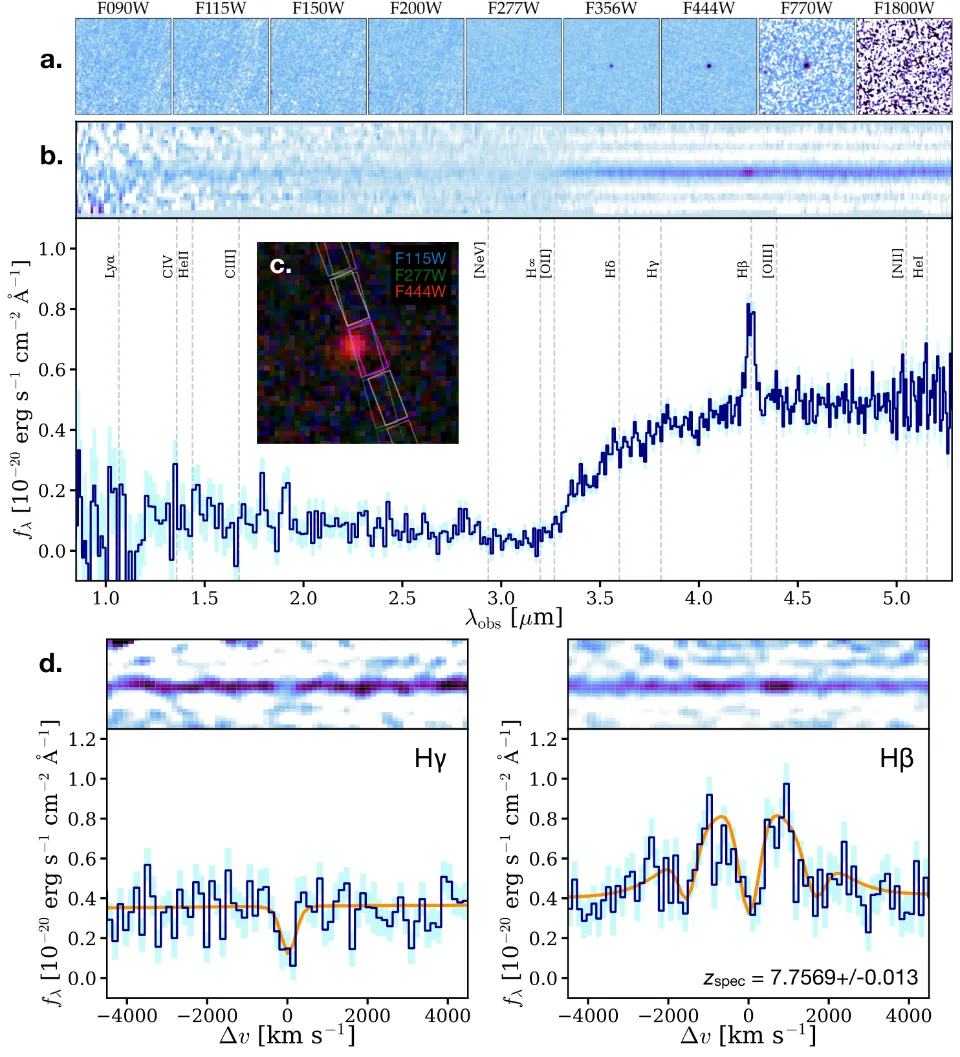
MoM-BH*-1 may be a young massive black hole inside a dense, nearly dust-free gas cocoon that turns accretion power into a star-like spectrum. The post James Webb spotted a bizarre object just 660 million years after the Big Bang that looks…
Summary from SpaceDaily.